
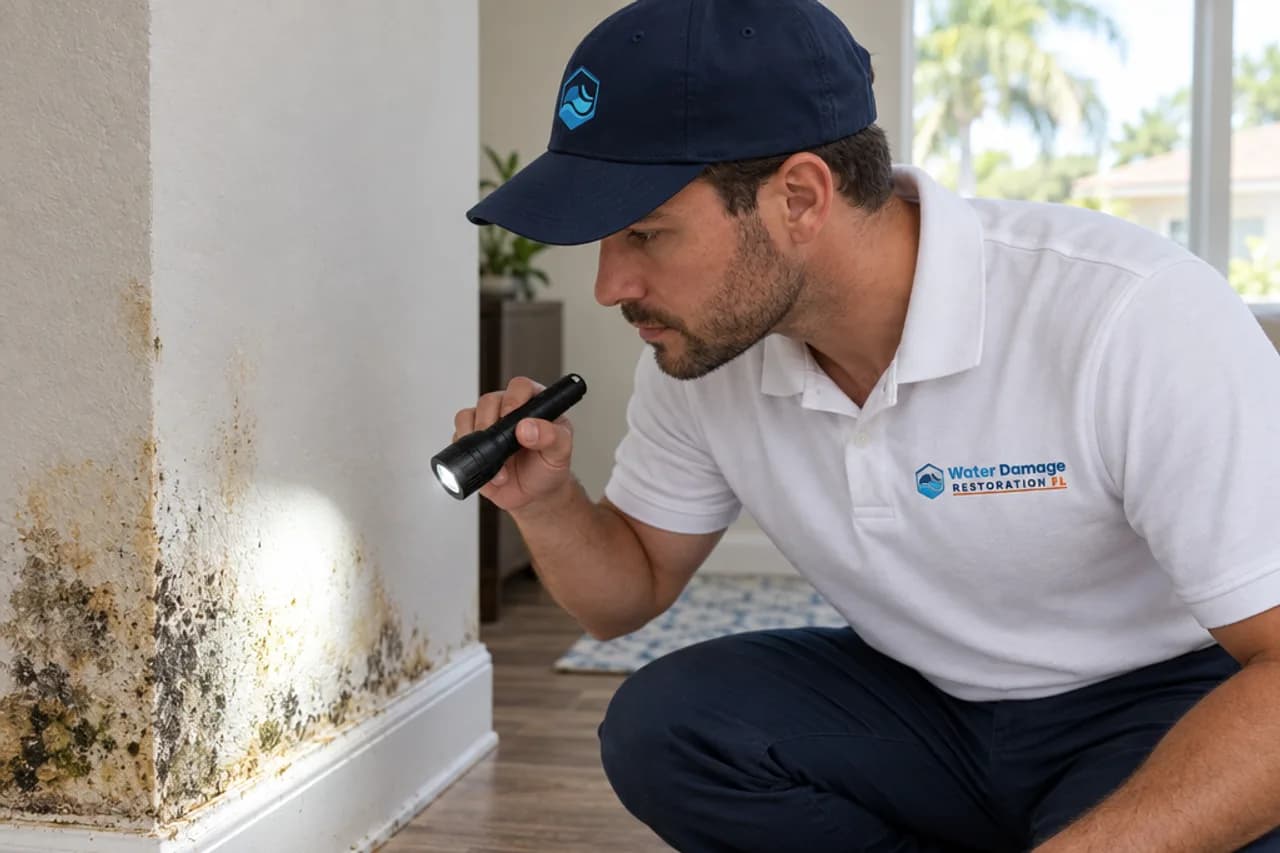
Mold rarely announces itself. It thrives in dark, humid spaces, which means it often grows behind walls, under flooring, or inside cabinets before it's ever visible. Learning to spot the early signs lets you catch a mold problem while it's small and contained — and far easier to address.
Trust your nose
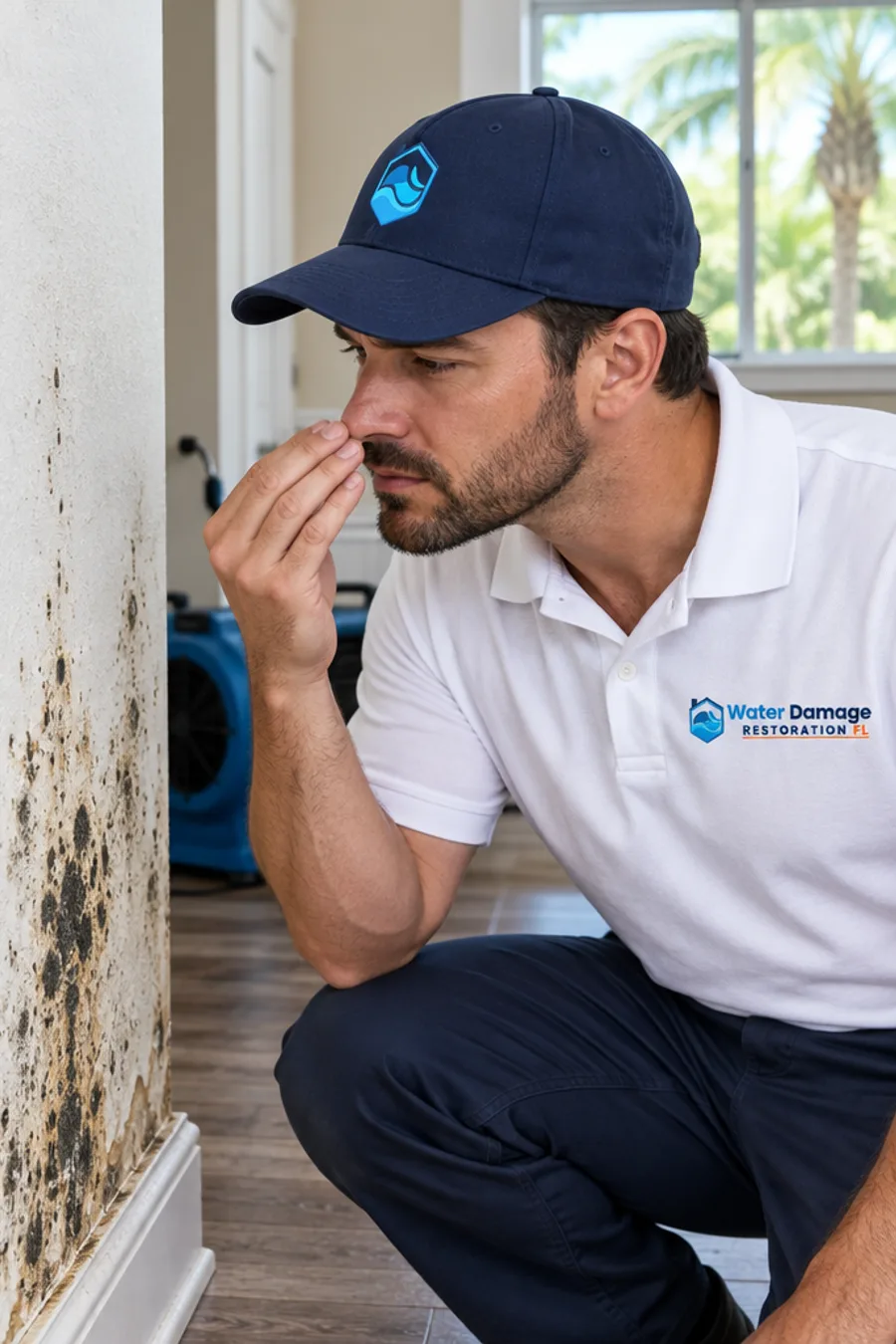
A musty odor is frequently the first sign something is wrong, even before any staining appears. If a room or area smells persistently damp or earthy, take it seriously — it often means moisture and growth are present out of sight. Our post on what causes a musty smell goes deeper on this clue.
Know where to look
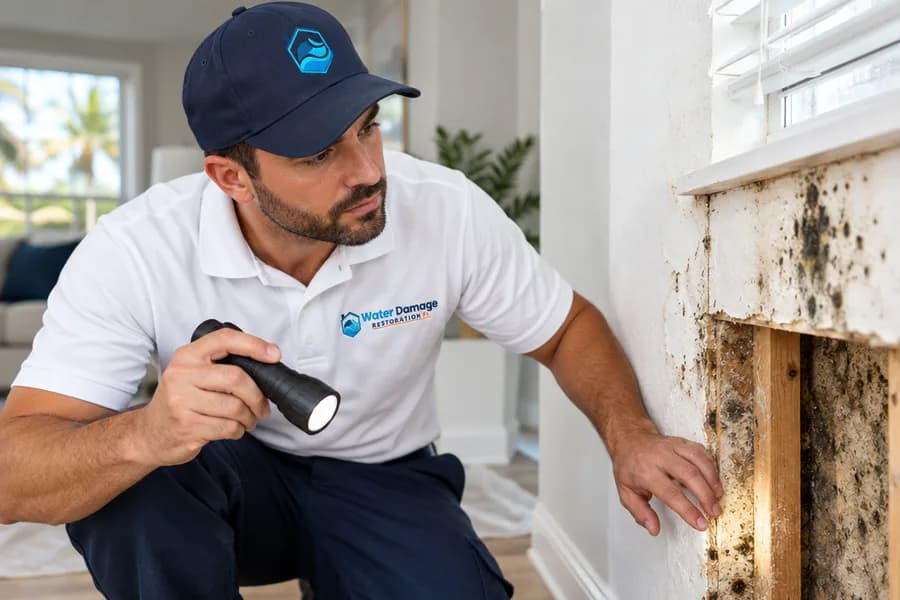
Check around windows, under sinks, and near any past leaks for discoloration, bubbling paint, or a soft feel to drywall. Bathrooms, laundry rooms, and closets against exterior walls are common trouble spots due to consistent moisture. In Florida, high humidity alone can be enough to support growth in poorly ventilated areas.
The connection to water damage
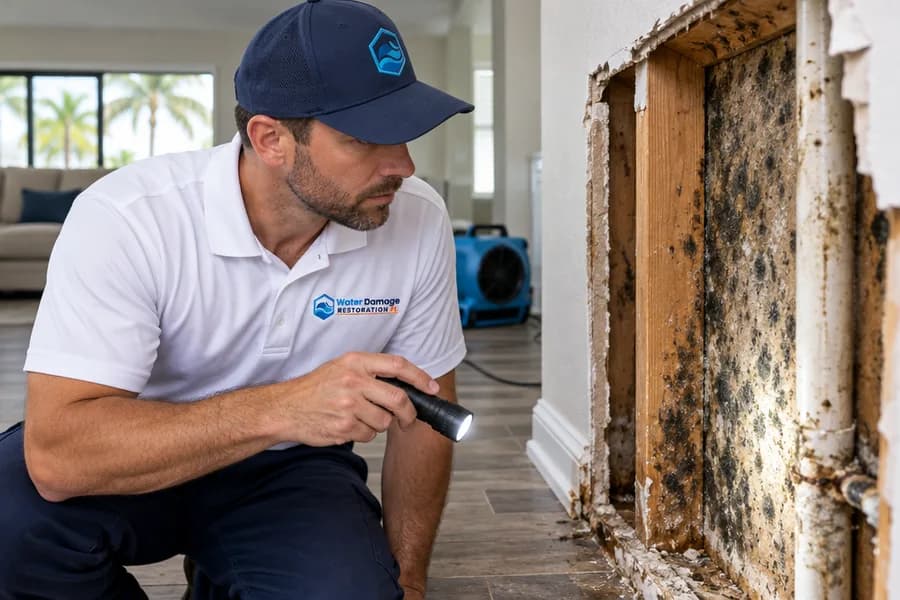
Mold and water damage go hand in hand. Any place where water damage wasn't fully dried is a prime candidate for hidden mold, which is why complete drying and dehumidification after a leak matters so much.
What to do if you suspect mold
If you spot signs of mold or have had recent water damage, an inspection can identify the moisture source before the problem spreads further. Professional mold remediation removes the growth safely and, crucially, corrects the moisture behind it — because removal without fixing the source only leads to it coming back.
Why early detection saves money
Catching mold early isn't just about health and peace of mind — it's about cost. A small, contained patch of mold is quick and inexpensive to address. The same problem left to spread behind walls, into insulation, and across structural materials becomes a far larger remediation, often with reconstruction on top. Because mold grows quietly out of sight, the difference between a minor job and a major one is frequently just how long it went unnoticed. That's what makes learning the early signs — especially the musty smell — so worthwhile.
Rooms most prone to hidden mold
Some spaces are more likely to hide mold than others, thanks to consistent moisture and limited airflow:
- Bathrooms — around showers, tubs, and grout, and behind toilets.
- Laundry rooms — around the washer connections and in humid air.
- Kitchens — under the sink and behind the dishwasher and fridge.
- Basements, crawl spaces, and closets against exterior walls.
- Attics and around HVAC systems, where condensation collects.
What to do — and not do — if you find mold
If you spot mold, resist the urge to attack it. Don't scrub, sand, or tear at it — disturbing mold without containment releases spores that spread the problem, and painting over it just hides it while the growth continues. Instead, limit traffic through the area, look for the moisture source that's feeding it, and for anything beyond a small surface spot, arrange a professional assessment. The right response finds and fixes the moisture and removes the growth safely, so it doesn't simply return.
Why hidden mold is so common in Florida
Florida's climate makes hidden mold a particular concern. Year-round humidity keeps indoor moisture levels high, constant air-conditioning creates condensation around vents and ducts, and frequent heavy rain and storms drive water into roofs and walls. Together, these give mold more chances to take hold — and more damp, dark, out-of-sight places to do it.
The same climate also speeds things up: mold can begin within 24 to 48 hours of materials getting damp, and Florida's warmth shortens that window. So a hidden leak or a poorly dried water event turns into mold faster here than in a drier region. That combination of more moisture and faster growth is why Florida homeowners benefit from being especially alert to the early signs — and from drying any water damage quickly and completely.
How mold spreads if left alone
Mold doesn't stay put. It reproduces by releasing spores into the air, which settle on other damp surfaces and start new growth, so a small patch in a hidden spot can gradually colonize a much larger area. Disturbing it — bumping it, running an HVAC system near it, or trying to clean it without containment — accelerates the spread by launching spores into the air. Left unaddressed, mold that started behind one wall can work its way through insulation, into adjacent rooms, and into the air you breathe. This is why early detection and containment matter so much: the longer it grows, the bigger and more expensive the eventual remediation.
How professionals inspect for mold
A professional mold inspection looks for both the growth and the moisture feeding it:
- Visual examination of common trouble spots and any areas with a musty smell.
- Moisture meters to find damp materials that support growth.
- Thermal cameras to reveal hidden moisture behind surfaces.
- Review of any past water-damage or leak history.
- Checking humidity-prone areas like bathrooms, attics, and around HVAC systems.
Keeping mold from coming back
Because mold needs moisture, lasting prevention is about moisture control:
- Fix leaks promptly and dry any water damage completely.
- Keep indoor humidity in check with AC and dehumidifiers as needed.
- Ventilate bathrooms, kitchens, and laundry rooms well.
- Keep the AC condensate line clear.
- Act on the first musty smell rather than waiting.